Popular Italian Dishes You’ll Want to Make at Home. There’s something irresistible about Italian food. Maybe it’s the aroma of garlic sizzling in olive oil, the first bite of a perfectly sauced pasta, or a bubbling pan of cheesy lasagna coming out of the oven.
The good news? You don’t need a professional kitchen or a trip to Rome to enjoy delicious Italian-inspired meals at home.
From the crisp, simple beauty of pizza Margherita to comforting bowls of minestrone, popular Italian dishes offer something for almost every taste, budget, and cooking skill level.
In this guide, you’ll discover 12 well-loved Italian and Italian-American favorites, learn what makes each dish special, and find three approachable recipes with ingredients available in most American grocery stores.
Whether you’re planning a family dinner, entertaining friends, or exploring Italian cooking for the first time, there’s plenty here to inspire your next meal.
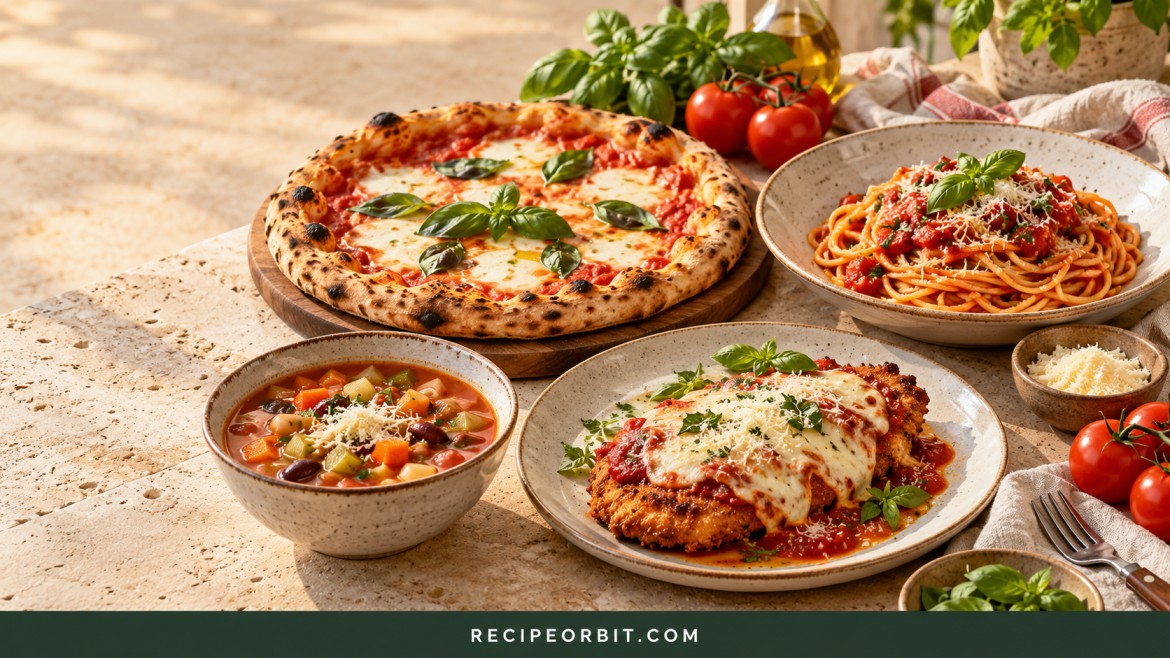
Why You’ll Love These Italian Dishes
- Everyday ingredients: Many recipes use tomatoes, pasta, olive oil, garlic, herbs, and cheese.
- Flexible cooking options: Choose from quick pasta dinners, hearty soups, and comforting baked dishes.
- Beginner-friendly techniques: Learn practical methods without complicated equipment.
- Easy customization: Adapt dishes to different tastes and dietary preferences.
- Family-friendly meals: Find options for casual weeknights and special occasions.
12 Popular Italian Dishes Worth Trying
1. Pizza Margherita
Pizza Margherita is a Naples-associated classic built around tomato, mozzarella, basil, and pizza dough.
Its appeal comes from balancing a few flavorful ingredients rather than piling on toppings. A hot oven and well-preheated baking surface help produce a crisp, nicely browned crust.
Best for: Pizza nights and entertaining friends.
2. Spaghetti alla Carbonara
Carbonara is a Roman pasta dish traditionally made with pasta, eggs, Pecorino Romano, guanciale, and black pepper.
Unlike many American restaurant interpretations, classic carbonara doesn’t rely on heavy cream. Its silky sauce develops when eggs, cheese, rendered fat, and pasta water come together without scrambling.
Best for: A rich, satisfying pasta dinner.
3. Lasagna al Forno
Lasagna al forno combines pasta sheets with flavorful fillings and sauce, then bakes everything into comforting layers.
Regional versions differ. Lasagna alla Bolognese typically features ragù, béchamel, pasta, and Parmigiano Reggiano, while American versions often use ricotta and mozzarella.
Best for: Weekend dinners, gatherings, and make-ahead meals.
4. Risotto alla Milanese
This northern Italian rice dish is known for its creamy consistency and golden color from saffron.
Traditionally made with a suitable risotto rice, such as Carnaroli or Arborio, it develops its texture as starch releases during cooking.
The secret is adding warm liquid gradually while maintaining a gentle simmer.
Best for: Special occasions or an elegant dinner.
5. Cacio e Pepe
Cacio e pepe proves that a short ingredient list can deliver remarkable flavor.
This Roman favorite combines pasta, Pecorino Romano, freshly ground black pepper, and starchy pasta water.
Temperature control is important. Adding cheese to an excessively hot pan can make the sauce clump instead of becoming smooth.
Best for: Minimal-ingredient weeknight cooking.
6. Gnocchi di Patate
Gnocchi are tender potato dumplings commonly served with tomato sauce, butter and sage, or pesto.
Their texture depends on the potato mixture and how much flour is added. Too much flour can produce heavy, chewy dumplings.
Store-bought gnocchi offer a convenient shortcut for busy evenings.
Best for: Comfort food with flexible sauces.
7. Pasta al Pomodoro
Simple tomato pasta is one of the most accessible Italian meals for home cooks.
A good sauce needs little more than tomatoes, olive oil, garlic, and basil. Tossing pasta directly in the sauce helps the flavors come together.
Best for: A quick vegetarian dinner.
8. Minestrone
Minestrone is a hearty Italian vegetable soup that changes with the season and region.
Many versions contain vegetables, beans, and sometimes pasta or rice. It’s a practical way to use produce already in your refrigerator.
Best for: Budget-friendly meals and meal preparation.
9. Bruschetta al Pomodoro
Bruschetta begins with toasted or grilled bread, often rubbed with garlic and dressed with olive oil.
A tomato-topped version adds fresh chopped tomatoes and basil for a bright, flavorful appetizer.
For the best texture, spoon the tomato mixture onto the bread shortly before serving.
Best for: Parties and simple appetizers.
10. Osso Buco
Osso buco is a Milanese specialty featuring cross-cut veal shanks slowly braised until tender.
The cooking process creates a rich, savory sauce, often complemented by gremolata made with lemon zest, parsley, and garlic.
It requires more time than weeknight pasta, but much of that time involves gentle cooking.
Best for: Slow-cooked weekend dinners.
11. Tiramisu
Tiramisu is a beloved Italian dessert typically layered with coffee-soaked ladyfingers, mascarpone cream, and cocoa.
Its combination of coffee, creaminess, and soft cake-like layers makes it an appealing make-ahead dessert.
If a recipe uses raw eggs, choose a preparation that uses pasteurized eggs or a properly cooked egg mixture.
Best for: Dinner parties and celebrations.
12. Chicken Parmesan
Chicken Parmesan, also called chicken Parmigiana, is particularly popular in Italian-American cooking.
Breaded chicken cutlets are topped with tomato sauce and melted cheese, creating a crispy, comforting main course.
Although associated with Italian cuisine in the United States, this chicken preparation is better described as an Italian-American favorite than a traditional regional Italian classic.
Best for: Family dinners and comfort-food cravings.
Which Italian Dish Should Beginners Try First?
If you’re just getting started, choose based on the time and effort you want to spend.
| Your goal | Try this dish |
| Fast pasta dinner | Pasta al Pomodoro |
| Simple vegetable meal | Minestrone |
| Minimal ingredients | Cacio e Pepe |
| Family comfort food | Chicken Parmesan |
| Easy appetizer | Bruschetta |
| Make-ahead dessert | Tiramisu |
Below are three complete recipes to help you start cooking.
Recipe 1: Easy Pasta al Pomodoro
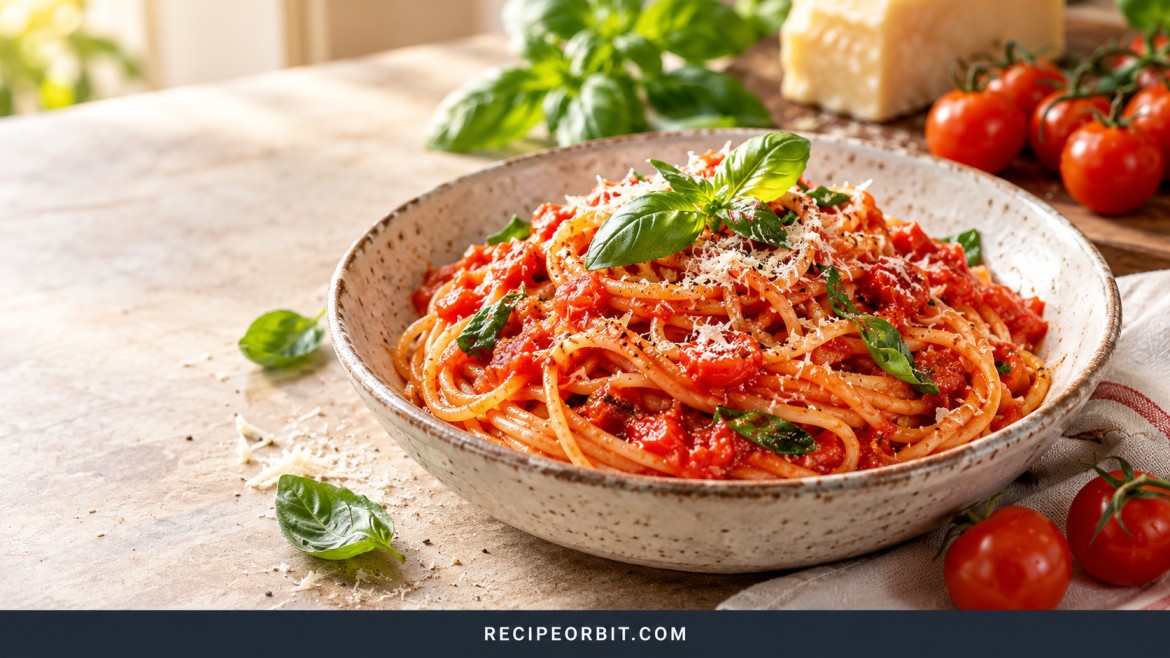
Prep: 10 minutes | Cook: 20 minutes | Total: 30 minutes
Servings: 4
This tomato pasta is a reliable starting point for learning how to balance a sauce and finish pasta properly.
Ingredients
- 12 oz dried spaghetti
- 1 (28-oz) can crushed tomatoes
- 2 tablespoons extra-virgin olive oil
- 3 garlic cloves, minced
- 1/4 cup fresh basil leaves, torn
- 1/4 cup grated Parmesan cheese
- Salt and freshly ground black pepper, to taste
- Reserved pasta cooking water, as needed
Step-by-Step Instructions
- Cook the pasta. Bring a large pot of salted water to a boil. Cook the spaghetti until just shy of al dente according to package instructions. Reserve 1 cup of pasta water before draining.
- Warm the garlic. Heat olive oil in a large skillet over medium-low heat. Add garlic and cook for approximately 30–60 seconds, just until fragrant.
- Simmer the sauce. Add crushed tomatoes, a little salt, and black pepper. Simmer gently for 12–15 minutes, stirring occasionally.
- Combine. Transfer the drained pasta to the skillet. Toss with the tomato sauce for 1–2 minutes, adding reserved pasta water a tablespoon or two at a time until the sauce coats the strands.
- Finish. Turn off the heat. Stir in fresh basil, divide among four plates, and top with Parmesan.
Cooking Tips and Variations
Avoid browning the garlic, which can make the sauce bitter. If your tomatoes taste unusually acidic, allow the sauce to simmer a little longer before adjusting the seasoning.
For extra heat, add a pinch of red pepper flakes. Gluten-free spaghetti can work, although cooking time and texture will vary.
Recipe Development Note: Simmer the tomato sauce for 12–15 minutes and finish the pasta directly in the sauce. Add reserved pasta water gradually for a smooth consistency. Check the final seasoning before serving.
Serving suggestion: Pair with a green salad or roasted vegetables.
Recipe 2: Hearty Italian-Style Minestrone Soup
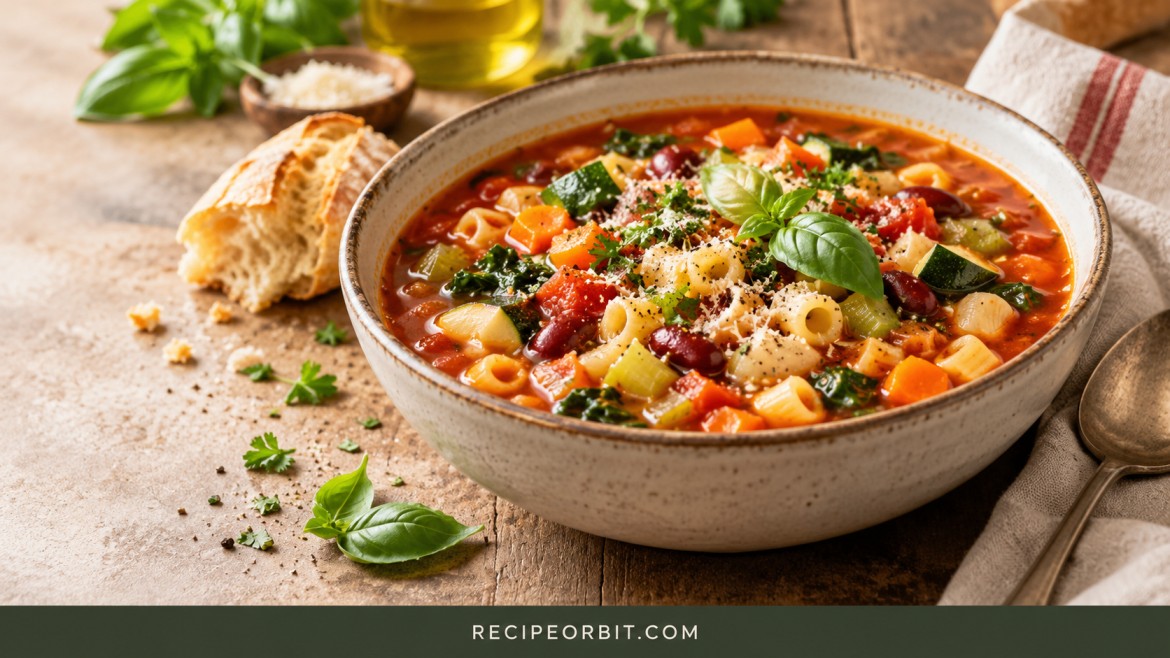
Prep: 15 minutes | Cook: 30 minutes | Total: 45 minutes
Servings: 6
This vegetable-packed soup is especially useful when you want an affordable dinner that makes good leftovers.
Ingredients
- 1 tablespoon olive oil
- 1 medium yellow onion, diced
- 2 medium carrots, diced
- 2 celery stalks, chopped
- 3 garlic cloves, minced
- 1 medium zucchini, diced
- 1 (14.5-oz) can diced tomatoes
- 1 (15-oz) can cannellini beans, drained and rinsed
- 4 cups low-sodium vegetable broth
- 1 cup dry small pasta, approximately 4 oz
- 2 cups chopped kale
- 1 teaspoon dried oregano
- Salt and black pepper, to taste
Step-by-Step Instructions
- Sauté the vegetables. Heat olive oil in a large soup pot over medium heat. Add onion, carrots, and celery. Cook for 5–6 minutes, stirring occasionally.
- Build the flavor. Add garlic, zucchini, and oregano. Cook for another minute.
- Simmer. Add diced tomatoes, beans, and vegetable broth. Bring to a gentle boil, reduce the heat, and simmer for about 10 minutes.
- Add the pasta. Stir in the dry pasta and cook according to its package timing, usually 8–10 minutes, until tender.
- Finish with greens. Add the kale during the final 3–4 minutes. Season to taste and serve warm.
Cooking Tips and Variations
For a thicker soup, mash a small portion of the beans against the side of the pot.
For a gluten-free version, replace the pasta with cooked rice or a suitable gluten-free pasta.
If you plan to freeze the soup, cook the pasta separately and add it when serving. This prevents the noodles from becoming excessively soft.
Recipe Development Note: Cut vegetables into evenly sized pieces for consistent cooking. The pasta absorbs broth as it cooks, so keep 1–2 cups of additional broth or water available to adjust the consistency.
Serving suggestion: Enjoy with crusty bread or a simple side salad.
Recipe 3: Crispy Baked Chicken Parmesan
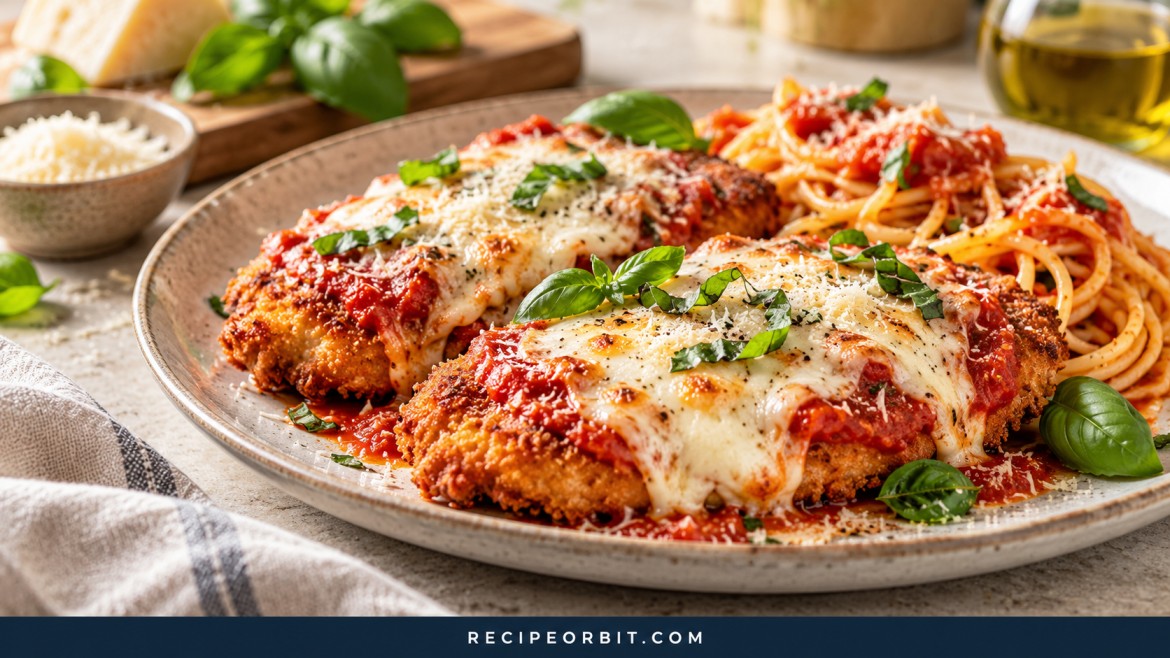
Prep: 15 minutes | Cook: 20 minutes | Total: 35 minutes
Servings: 4
This Italian-American dinner combines golden breaded chicken, tomato sauce, and melted cheese. Browning the cutlets before baking helps create a flavorful crust.
Ingredients
- 1 1/4 lb boneless, skinless chicken breast cutlets, about 1/2 inch thick
- 1 large egg, beaten
- 1/2 cup plain breadcrumbs
- 1/4 cup grated Parmesan cheese
- 1/2 teaspoon dried oregano
- 2 tablespoons olive oil
- 1 cup marinara sauce
- 4 oz shredded part-skim mozzarella
- Salt and black pepper, to taste
- Fresh basil, optional
Step-by-Step Instructions
- Preheat the oven. Set the oven to 425°F. Lightly prepare a rimmed baking sheet.
- Prepare the coating. Pat the chicken dry. Season lightly with salt and pepper. Place the beaten egg in one shallow bowl; combine breadcrumbs, Parmesan, and oregano in another.
- Bread the chicken. Dip each cutlet into the egg, then coat evenly with the breadcrumb mixture.
- Brown the cutlets. Heat olive oil in a skillet over medium heat. Cook the breaded chicken for approximately 2–3 minutes per side, until lightly golden. Work in batches if necessary.
- Add toppings. Transfer the chicken to the baking sheet. Spoon marinara sauce over each cutlet and top with mozzarella.
- Bake until cooked. Bake for approximately 8–12 minutes, or until the thickest part of the chicken reaches 165°F on a food thermometer.
- Serve. Rest briefly, garnish with basil if desired, and serve warm.
Cooking Tips and Variations
Choose evenly thick cutlets so they finish cooking at roughly the same time.
Avoid covering the entire breaded surface with sauce if you want to preserve some crispness.
For a different texture, try panko breadcrumbs. To reduce saturated fat, use a lighter amount of mozzarella, knowing that flavor and nutrition will change.
Recipe Development Note: Use evenly sized, ½-inch-thick chicken cutlets. Brown the breading before baking and use a food thermometer to confirm the chicken reaches 165°F. Add sauce primarily to the center to preserve some crispness.
Serving suggestion: Pair with spaghetti, sautéed spinach, or roasted broccoli.
Estimated Nutrition Information
The following values are ingredient-based working estimates, not laboratory measurements. They assume the stated serving counts and standard ingredient nutrition values.
| Recipe | Serving | Calories | Protein | Carbs | Fat |
| Pasta al Pomodoro | 1 of 4 portions | ~453 kcal | ~16 g | ~79 g | ~11 g |
| Minestrone | 1 of 6 bowls | ~197 kcal | ~8 g | ~34 g | ~3 g |
| Chicken Parmesan | 1 of 4 cutlets | ~445 kcal | ~45 g | ~17 g | ~21 g |
Calculation transparency: Approximate total ingredient calories divided by the number of servings:
- Pomodoro: (1,200 pasta + 240 tomatoes + 240 oil + 20 garlic/basil + 110 cheese) ÷ 4 = approximately 453 kcal.
- Minestrone: approximately 1,184 total ingredient calories ÷ 6 = approximately 197 kcal.
- Chicken Parmesan: (680 chicken + 220 breadcrumbs + 110 Parmesan + 70 egg + 240 oil + 140 sauce + 320 mozzarella) ÷ 4 = approximately 445 kcal.
These calculations use typical USDA-style ingredient reference values and common US package-label assumptions. Actual values depend on ingredient brands, moisture content, oil absorption, and portion sizes.
Sodium is not estimated because broth, cheese, canned products, and added salt can vary substantially. None of these recipes has been independently nutrition-reviewed by a registered dietitian.
Common Mistakes to Avoid When Cooking Italian Food
Overcooking pasta: Start checking for doneness before the package’s maximum cooking time. Pasta continues softening when tossed with hot sauce.
Burning garlic: Add garlic after other vegetables when appropriate, and keep the heat moderate.
Using too much sauce: A good pasta dish doesn’t need to be swimming in sauce. Start with less and add more as needed.
Skipping pasta water: A little starchy cooking liquid can help a sauce coat the noodles more evenly.
Overcooking chicken: Use a food thermometer rather than guessing from color or cooking time.
Overcrowding the skillet: Brown chicken in batches so the coating has room to crisp.
Ingredient Substitutions and Flavor Variations
Italian-inspired meals can be adapted without making cooking unnecessarily complicated.
- Replace standard pasta with gluten-free pasta when appropriate.
- Use vegetable broth instead of chicken broth in vegetable soups.
- Add mushrooms, spinach, or roasted zucchini to tomato pasta.
- Use roasted eggplant in a Parmesan-style preparation instead of chicken, adjusting the breading and cooking method.
- Substitute another melting cheese for mozzarella when necessary, understanding that the result will differ from the original.
When describing substitutions, it’s useful to distinguish a convenient adaptation from a traditional preparation.
Storage and Reheating Tips
Refrigerate perishable leftovers promptly in shallow, covered containers, within two hours of cooking. Keep the refrigerator at 40°F or below.
For the recipes in this guide, plan to consume properly refrigerated leftovers within 3–4 days, or freeze suitable portions sooner.
Reheat leftovers thoroughly to 165°F. Add a splash of water to pasta or soup to restore moisture. Chicken Parmesan reheats well in an oven, although its breadcrumb coating may lose some crispness.
Freeze minestrone without pasta for a better texture after thawing. Tomato sauce also freezes more successfully than fully assembled pasta.
Frequently Asked Questions
What are the most popular Italian dishes?
Pizza, pasta carbonara, lasagna, risotto, gnocchi, minestrone, and tiramisu are widely recognized Italian favorites. Popularity varies by region, country, and individual taste.
Which Italian dish is easiest for beginners?
Pasta al pomodoro is an excellent starting point. It requires accessible ingredients, a manageable cooking process, and relatively little specialized equipment.
Is all Italian food made with pasta?
No. Italian cuisine includes rice dishes, soups, vegetables, seafood, meats, breads, and desserts. Regional ingredients and cooking traditions create a wide variety of meals.
Is Chicken Parmesan an authentic Italian dish?
Chicken Parmesan is best known as an Italian-American classic. It reflects Italian culinary influences but should not be confused with a traditional regional Italian chicken recipe.
Can Italian meals be healthy?
Italian-inspired meals can fit a variety of balanced eating patterns. Nutritional quality depends on portion size, ingredients, preparation methods, and the overall meal. Vegetable-based soups, tomato sauces, beans, and whole grains can offer useful variety.
What ingredients should I keep for Italian cooking?
Olive oil, dried pasta, canned tomatoes, garlic, dried oregano, black pepper, and beans are practical pantry staples. Fresh basil, Parmesan, mozzarella, and seasonal vegetables can add extra flavor.
More Recipe Ideas to Explore
If you enjoyed these dishes, explore these related cooking topics:
- Homemade Spaghetti Noodles
- Easy Dinner Recipes for Busy Weeknights
- Peanut Butter Protein Snacks
- Classic Italian Tomato Sauce
- Simple Italian Desserts for Beginners
Final Thoughts
You don’t need complicated ingredients to start exploring Italian cooking.
Begin with a simple tomato pasta, learn to build flavor in a vegetable soup, or make a comforting Chicken Parmesan dinner for the family.
Once you understand the basic techniques, you’ll have more confidence to experiment with other dishes.
Which Italian dish would you love to cook next? Share your choice or cooking question in the comments!
About the Author
Sadia Parvin is a food blogger and home-cooking enthusiast associated with RecipeOrbit.com, with five years of cooking and food-blogging experience. Her content focuses on accessible ingredients, practical kitchen methods, and approachable recipe ideas for home cooks.
Nutrition and Food Safety Disclaimer
Nutrition information is approximate and provided for general educational purposes. It is not individualized dietary or medical advice. Ingredient brands, substitutions, and serving sizes can change nutrition values. For specific dietary requirements, consult a qualified healthcare professional or registered dietitian.
