Homemade Spaghetti Noodles From Scratch (Easy Fresh Pasta). There is something special about making pasta from scratch. A few simple ingredients can become tender, silky noodles that turn an ordinary dinner into something memorable. And you do not need to be a professional chef to make them.
These homemade spaghetti noodles use all-purpose flour, eggs, salt, and a little olive oil if desired. The dough is straightforward to prepare, easy to customize, and suitable for serving with everything from classic marinara to creamy Alfredo sauce.
The most important part is learning how the dough should feel, when to let it rest, and how to cook fresh pasta without making it gummy. Once you understand those basics, homemade pasta becomes much less intimidating.
Whether you are planning a cozy family dinner or simply want to try making fresh pasta at home, this guide will walk you through the process.
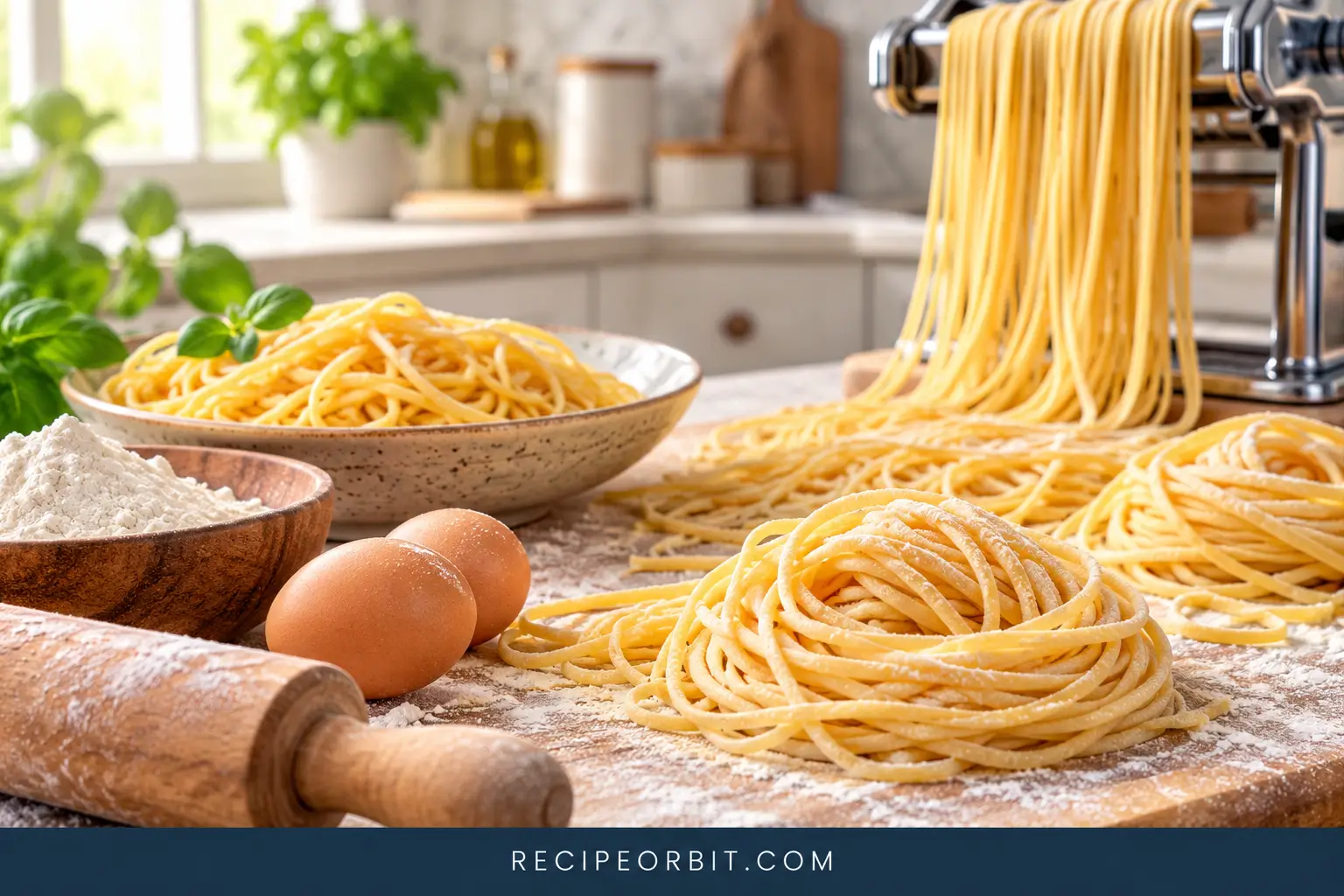
Why You’ll Love These Homemade Spaghetti Noodles
- Simple ingredients: You probably have most of what you need in your kitchen already.
- Fresh pasta texture: Properly prepared noodles are tender with a pleasant, slightly chewy bite.
- Easy to customize: Adjust the flour blend or add herbs and seasonings to suit your meal.
- Flexible preparation: Make the dough by hand and use a pasta machine, spaghetti cutter, or manual cutting method.
- Freezer-friendly: Prepare extra noodles ahead of time for convenient future meals.
The recipe is especially useful if you want to learn the fundamentals of fresh egg pasta before experimenting with more advanced shapes.
Homemade Spaghetti Noodles Recipe at a Glance
| Recipe detail | Information |
| Prep time | 35 minutes |
| Resting time | 30 minutes |
| Cooking time | 2–4 minutes |
| Total time | About 1 hour 10 minutes |
| Yield | 4 servings |
| Difficulty | Moderate |
| Main ingredients | Flour and eggs |
Times are estimates and will vary with your equipment and experience.
Ingredients You’ll Need
For the pasta dough
- 2 1/2 cups (300 g) all-purpose flour, spooned and leveled
- 3 large eggs
- 1 teaspoon olive oil, optional
- 1/2 teaspoon fine salt
- A little extra flour or semolina for dusting
- 1–2 teaspoons water, only if needed to bring a dry dough together
Why these ingredients work
All-purpose flour is accessible and produces a versatile homemade pasta dough. Eggs provide moisture, richness, and structure. Salt seasons the dough, while a small amount of olive oil is optional and can make handling the dough a little easier.
Weighing the flour is particularly helpful because measuring cups can hold different amounts depending on how the flour is scooped.
How to Make Homemade Spaghetti Noodles
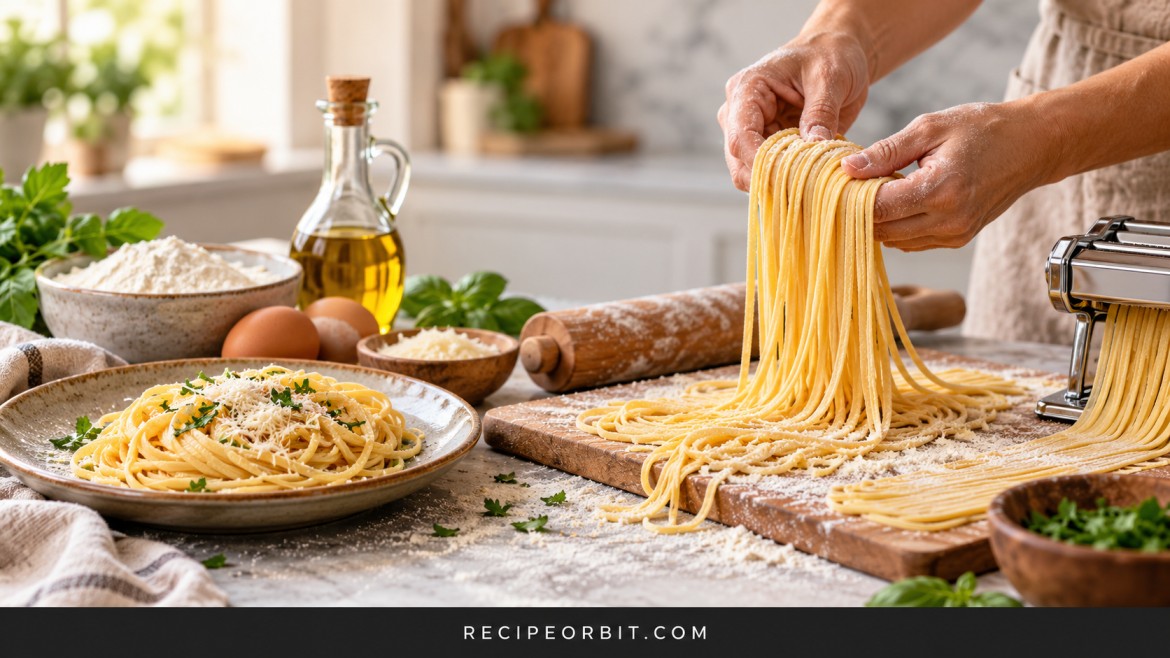
Step 1: Make the dough
Place the flour on a clean work surface and create a well in the center. Crack the eggs into the well, then add the salt and optional olive oil.
Use a fork to gradually beat the eggs while drawing small amounts of flour inward from the edges. Continue until the mixture becomes thick and a rough dough begins to form.
If this feels difficult, use a large mixing bowl instead. The goal is the same: incorporate the flour gradually without letting the eggs run across the work surface.
Step 2: Knead until smooth
Bring the dough together with your hands. Knead it for approximately 8–10 minutes, pressing it forward with the heel of your hand and folding it back over itself.
At first, the dough may look rough or feel quite firm. That is normal for egg pasta. Continue kneading until it becomes smoother and more cohesive.
If the dough is so dry that flour remains loose and cannot be incorporated, add water a few drops at a time. If it is excessively sticky, dust your hands and the work surface with a small amount of flour.
Avoid adding too much extra flour or water at once because small adjustments can make a significant difference to the final texture.
Step 3: Let the dough rest
Shape the dough into a ball and wrap it tightly in plastic wrap or cover it in an airtight container.
Let it rest at room temperature for 30 minutes.
This resting period gives the flour time to hydrate and allows the gluten to relax. The result is dough that is easier to roll and less likely to spring back when stretched.
Do not skip this step simply because the dough already looks smooth. Resting makes the next stage considerably easier.
Step 4: Divide and roll the dough
Divide the rested dough into four portions. Keep the portions you are not using covered so their surfaces do not dry out.
Flatten one portion into a small rectangle. If you have a pasta machine, begin with its widest setting and feed the dough through.
Fold the dough into thirds and pass it through the widest setting again two or three times if necessary to create a smooth sheet. Then gradually reduce the thickness setting until the pasta is thin enough for your preferred spaghetti cutter.
Lightly dust the dough with flour or semolina whenever it feels tacky. Use only enough to prevent sticking.
No pasta machine? Roll the dough with a rolling pin on a lightly floured surface until very thin. You can then cut narrow ribbons with a sharp knife. These will be thin hand-cut pasta ribbons rather than perfectly round, traditional spaghetti strands. A spaghetti cutter or pasta extruder is needed for the classic spaghetti shape.
Step 5: Cut the spaghetti
Pass the thin pasta sheet through the spaghetti attachment or cutter. Catch the strands gently as they emerge, then arrange them in loose nests on a lightly floured tray.
Do not press the noodles tightly together. Give the strands enough space to prevent sticking.
If you are working slowly, keep the finished noodles lightly dusted and covered with a clean kitchen towel for a short period while you prepare the remaining dough.
Step 6: Cook the fresh noodles
Bring a large pot of water to a boil and season it with salt. Gently add the fresh spaghetti, separating the strands as they enter the water.
Cook for approximately 2–4 minutes, checking early because thin homemade noodles cook quickly. The exact time depends on their thickness and how long they have been sitting before cooking.
Taste a strand to check the texture. It should be tender but still have a little bite.
Reserve a small cup of pasta water before draining. Toss the noodles immediately with your preferred sauce, adding a splash of pasta water if needed to help the sauce coat the strands.
Serve while hot for the best texture.
Expert Tips for Better Homemade Pasta
Measure the flour by weight. A kitchen scale helps you repeat the recipe more consistently than measuring cups alone.
Pay attention to the dough, not just the timer. Flour brands, humidity, and egg size affect how much moisture the dough needs. Make small adjustments rather than following a rigid water measurement.
Rest the dough properly. Resting helps the dough roll out more easily and reduces its tendency to shrink back.
Use a light dusting of flour. Too much loose flour can accumulate on the noodles and make the cooking water cloudy or the finished dish overly starchy.
Keep unused dough covered. Exposed dough can develop a dry surface that becomes difficult to roll or join.
Cook in manageable batches. Crowding the pot can make fresh strands stick together. Use plenty of boiling water and stir gently at the beginning.
Ingredient Substitutions
- Semolina flour: Replace up to 1/2 cup of the all-purpose flour with fine semolina for a slightly firmer, more textured noodle. You may need to adjust the moisture slightly.
- Whole-wheat flour: Replace a portion of the all-purpose flour with whole-wheat flour. The dough will usually feel denser and may require a little additional moisture.
- Olive oil: Leave it out if preferred. The recipe can be made without it.
- Fine salt: Use a similar measured amount of another salt, remembering that coarse and fine salts differ in volume and weight.
- Egg-free pasta: Egg-free pasta requires a different hydration formula, often using water and flour or semolina. Do not simply remove the eggs from this recipe without adjusting the dough.
For a first attempt, stick with the original ingredient quantities. Once you understand the dough’s texture, substitutions become easier to manage.
Common Mistakes to Avoid
Adding too much flour
Excess flour can make the dough dry, stiff, and difficult to roll. Dust lightly instead of covering the work surface with a thick layer.
Skipping the resting period
Freshly kneaded dough may resist rolling and repeatedly shrink back. Cover it and allow it to rest before shaping.
Rolling the sheets too thick
Thick strands take longer to cook and may feel heavy. Roll the sheets evenly and check the pasta cutter’s recommended thickness.
Cooking by time alone
Two-minute noodles and four-minute noodles can have very different textures depending on their thickness. Taste a strand early and stop cooking when it reaches your preferred doneness.
Leaving the noodles in a pile
Fresh pasta can stick together when damp. Arrange cut noodles in loose nests and dust them lightly before cooking or storing.
Variations to Try
Once you have mastered the basic recipe, experiment with these options:
- Herb pasta: Incorporate a small amount of finely chopped herbs into a compatible pasta dough, adjusting the moisture if necessary.
- Garlic and Parmesan pasta: Toss cooked noodles with sautéed garlic, butter or olive oil, and freshly grated Parmesan.
- Spicy spaghetti: Serve the noodles with a tomato sauce flavored with red pepper flakes.
- Creamy mushroom pasta: Combine the cooked spaghetti with sautéed mushrooms, garlic, cream, and black pepper.
- Classic marinara spaghetti: Pair the noodles with a tomato-based sauce and fresh basil for a simple Italian-inspired dinner.
These are serving variations rather than changes to the base dough, so you can prepare one batch of noodles and offer different sauces.
How to Store and Reheat Homemade Spaghetti Noodles
Storing uncooked noodles
Fresh egg pasta is best cooked soon after preparation. If you need to store it briefly, arrange the noodles in loose, lightly dusted nests, cover them, and refrigerate promptly. Aim to use refrigerated uncooked pasta within about 24 hours for quality, and discard it if its appearance or smell becomes abnormal.
Do not leave egg-based dough or noodles at room temperature for extended periods.
Freezing fresh pasta
Arrange the noodles in small, lightly floured nests on a tray and freeze until firm. Transfer them to a freezer-safe container or bag, label the date, and use within about one month for best quality.
Cook frozen noodles directly from frozen, allowing a little extra cooking time and checking frequently. Avoid thawing them into a wet, sticky mass.
Storing cooked pasta
Refrigerate cooked noodles in a covered container within two hours of cooking. Use within 3–4 days and reheat thoroughly.
For the best texture, warm them in a skillet with your sauce and a small splash of water. This helps loosen the strands without drying them out.
Follow food-safety guidance for refrigeration, cleanliness, and thorough cooking when handling raw egg and flour dough.
What to Serve With Homemade Spaghetti
Homemade spaghetti noodles work with a wide range of sauces and sides.
- Marinara sauce and fresh basil
- Meat sauce or slow-simmered Bolognese
- Garlic butter and Parmesan
- Creamy Alfredo sauce
- Roasted vegetables and olive oil
- A green salad and garlic bread
For a simple weeknight meal, toss the freshly cooked noodles with warm marinara and a little pasta water. For a richer dinner, use a creamy sauce and finish with grated Parmesan and freshly ground black pepper.
Homemade Spaghetti Noodles Nutrition Facts
The following values are estimates calculated from the ingredient quantities in this recipe using standard food-composition data. The calculation includes the flour, eggs, optional teaspoon of olive oil, and dough salt. It excludes sauce, toppings, and additional salt in the cooking water.
| Nutrient | Approximate amount per serving |
| Calories | 337 |
| Protein | 12 g |
| Total carbohydrates | 58 g |
| Total fat | 5.5 g |
| Dietary fiber | 2 g |
| Sodium | 350 mg |
Serving size: Approximately one-quarter of the uncooked recipe, before adding sauce.
These are calculated estimates, not laboratory-tested nutrition facts. Actual values can vary with flour composition, egg size, ingredient weights, and the amount of dough left behind during preparation.
Nutrition review: This recipe has not been reviewed by a registered dietitian. Anyone managing a medical condition or following a therapeutic diet should consult a qualified healthcare professional for individualized guidance.
Nutrition disclaimer: The information is provided for general educational purposes and is not a substitute for individualized medical or nutrition advice.
Frequently Asked Questions
1. Can I make homemade spaghetti noodles without a pasta machine?
Yes. You can roll the dough thinly with a rolling pin and cut it into narrow ribbons with a sharp knife. However, hand-cut ribbons will not have the same round cross-section as traditional spaghetti. For that shape, use a spaghetti cutter or pasta extruder.
2. Why is my homemade pasta dough too dry?
The flour may have absorbed more moisture than expected, or the eggs may have been smaller than usual. Knead the dough first, then add water a few drops at a time until the loose flour can be incorporated and the dough becomes cohesive.
3. Why does my pasta dough keep shrinking when I roll it?
The gluten may still be too tense. Cover the dough and let it rest for another 10–15 minutes before rolling again. Avoid forcing the sheet thinner in a single pass.
4. How long should fresh spaghetti noodles cook?
Most thin fresh spaghetti cooks in approximately 2–4 minutes in boiling water. Thickness, moisture, and resting time affect the result, so begin checking early rather than relying exclusively on the clock.
5. Can I make the dough ahead of time?
Yes. Prepare the dough, wrap it tightly, and refrigerate it if you need to make it ahead. For best handling and quality, use it within about 24 hours. Let it lose some of its refrigerator chill before rolling if it feels unusually firm.
6. Can homemade spaghetti noodles be frozen?
Yes. Freeze lightly dusted noodles in loose nests on a tray before transferring them to a freezer-safe container. Cook from frozen and check the texture frequently.
7. Do I need to add olive oil to the dough?
No. Olive oil is optional. Flour and eggs provide the main structure and moisture for this recipe, so you can omit the oil if you prefer.
8. Can I dry homemade egg pasta and keep it in the pantry?
Do not assume homemade egg pasta is shelf-stable simply because its surface feels dry. Drying conditions and moisture levels vary at home. Refrigerating or freezing fresh egg pasta is the more straightforward storage option for this recipe.
9. Is homemade pasta healthier than store-bought pasta?
Not automatically. Nutritional differences depend on the ingredients, portion size, and the sauce or toppings you add. Homemade pasta offers control over the ingredients and texture, but it still contributes calories and carbohydrates.
Reader Feedback
Have you made these homemade spaghetti noodles? Leave a rating and a comment describing the flour you used, how you shaped the pasta, and which sauce you served with it.
Your genuine feedback can help other home cooks decide whether this recipe is right for them.
About the Author
Sadia Parvin | Food Blogger & Home Cooking Enthusiast
Sadia Parvin is a passionate food blogger and home cooking enthusiast with 5 years of experience in cooking and food blogging. She focuses on making home cooking approachable by sharing easy-to-follow recipes, practical kitchen tips, and helpful cooking techniques.
Recipe Sources and Nutrition References
- USDA FoodData Central — reference database for food composition and nutrient estimates.
- FDA: Handling Flour Safely — food-safety guidance for raw flour and uncooked dough.
- FDA: What You Need to Know About Egg Safety — guidance on handling, storing, and cooking eggs safely.
